Measuring Polarization Using Clustering Techniques
A Group-based Polarization Measurement
From scholars to the media, everyone talks about polarization and its consequences with a large amount of data to endorse their arguments, but few know how to (properly) measure polarization. The largest obstacle lies in the discrepancy between how polarization is conceptualized and measured: definitions of polarization rely on the notion of a group identified based on (pairwise) similarities, but this notion is usually neglected when measuring polarization.
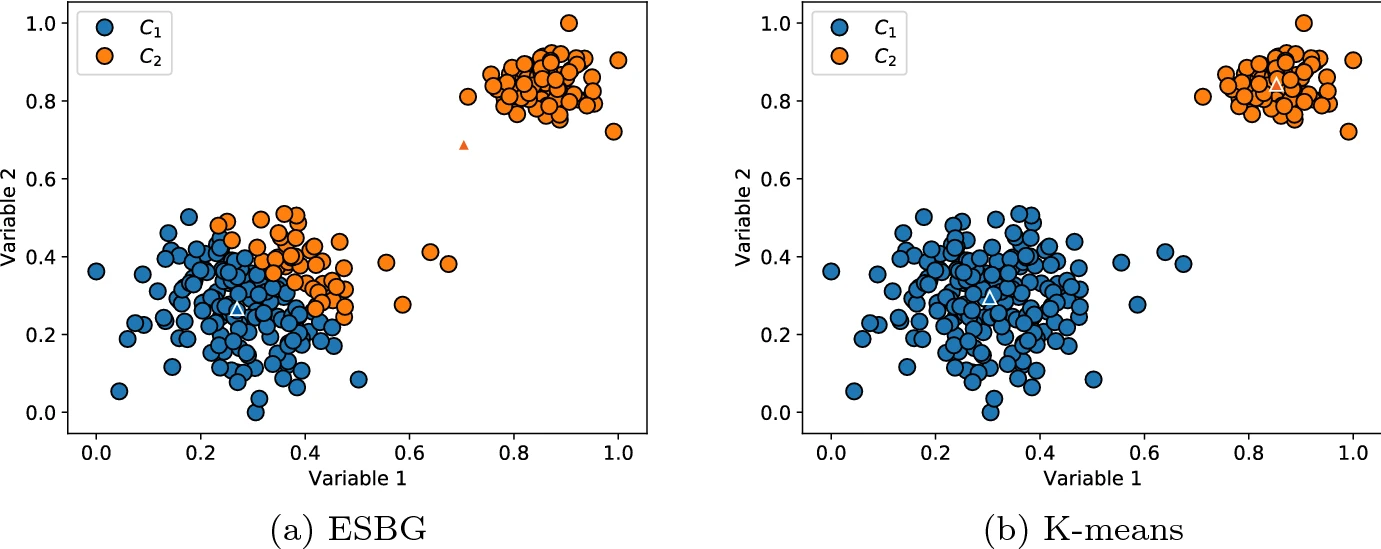
To address the discrepancy, we present a group-based polarization measurement based on a clustering method called Equal Size Binary Grouping (ESBG) for both uni- and multi-dimensional data. ESBG divides the population into two groups of equal sizes based on similarities between individuals. It can be viewed as a size-constrained version of K-means clustering (K=2), and the corresponding polarization measurement is a function of the between-group and within-group dissimilarity. The measurement has the following properties:
- Increases with the dissimilarity between groups
- Decreases with the dissimilarity within groups
Credits:
- Tanzhe Tang
- Amineh Ghorbani
- Flaminio Squazzoni
- Caspar Chorus
Funding:
This project has received funding from the European Research Council: Consolidator Grant BEHAVE (Grant Agreement No. 724431).
More Info:
- The paper of the project has been published in Quality and Quantity.